
- Solutions
- PortLink Solutions
Solutions Suite unlocks the power of optimization to make cargo flow.
Learn More Request a Demo

- PortLink Solutions
- Solutions
- PortLink Solutions
Solutions Suite unlocks the power of optimization to make cargo flow.
Learn More Request a Demo
- PortLink Solutions
How Smarter Berth Planning Drives Sustainable Waterside Operations

By Arun Gupta, Principal Optimization Engineer at Avlino
Across the maritime industry, sustainability has become a defining priority. Ports and terminals are under growing pressure to reduce their environmental impact while maintaining the efficiency that global trade demands. One of the most significant yet often overlooked sources of emissions occurs before a vessel even reaches the quay: while it is waiting at anchor. During these idle hours, ships burn fuel, emit greenhouse gases, and waste operational potential.
The question facing terminal operators is clear: how can emissions be reduced without compromising throughput or service quality? The answer lies in smarter berth planning. An approach that connects vessel scheduling, yard readiness, and equipment coordination to deliver synchronized, sustainable waterside operations.
The Cost of Waiting at Anchor
Every hour a vessel spends waiting at anchor represents more than a delay; it represents a measurable environmental and operational cost. Auxiliary engines continue to run to power onboard systems, producing vessel emissions even before cargo operations begin. In high-traffic corridors, these idle periods accumulate, adding unnecessary fuel consumption and greenhouse gas emissions to a port’s overall footprint.
Crucially, the root cause is often not pure congestion but misaligned schedules and limited visibility across stakeholders. If a vessel’s arrival is not coordinated with berth availability, pilotage, and landside readiness, small mismatches cascade into lost hours. Waiting at berth can be just as problematic: if quay crane sequencing or yard availability isn’t synchronized, productivity drops and turnaround time extends.
Reducing these inefficiencies demands proactive planning that considers the real-time status of berths, cranes, and yard flows. By tackling the factors that create waiting, terminals can make measurable progress on emissions reduction while improving predictability for shipping lines.
Smarter Berth Planning: Where Efficiency Meets Sustainability
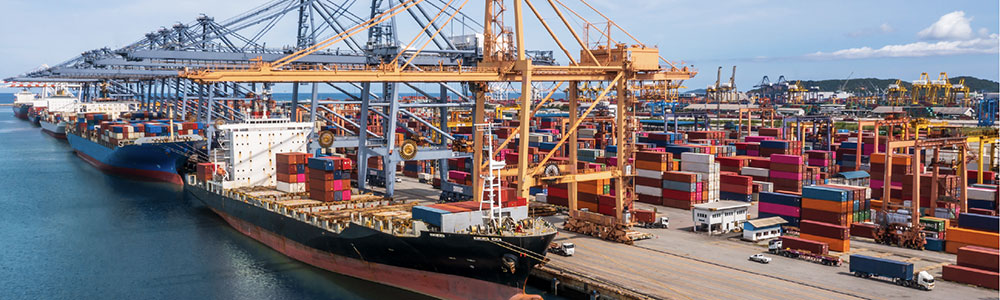
At its core, berth planning ensures that each vessel call is handled proactively and coordinated with all other vessel calls to maximize operational flow. It balances variables such as vessel size, draft, crane sizes, service priority, tidal windows, maintenance schedules, and available quay length. When approached holistically, berth planning becomes a foundational lever for sustainable waterside operations.
Primarily, optimal berth allocation shortens vessels’ idle time at anchor. Berth assignments that account for all vessel calls and their respective service constraints maximize berth utilization and reduce re-shuffling. In addition, integrating quay crane sequencing into the plan aligns crane deployment with the planned berth position and stowage strategy. This improves crane availability, cuts handoffs between gangs, and supports a smooth ramp-up of productivity as soon as mooring lines are fastened.
Effective vessel-berth assignment also accounts for container positions in the yard and transshipment flows, ensuring that containers of connecting vessels don’t have to travel far in the yard, improving operational efficiency. This improves the ITV cycle time and the gross moves per hour (GMPH) delivered by quay cranes.
Vessel operators and pilots receive reliable estimates of berth availability, enabling them to plan voyages for just-in-time service. Rather than arriving early and idling, ships adjust speed to reach port precisely when a berth window opens. That synchronization reduces anchorage time and makes better use of fuel[1], while ensuring resources are in place to start operations immediately.
Consider a terminal that integrates real-time ETA updates from shipping lines into its berth plan, and aligns them with berth and crane availability while respecting SLAs. With holistic planning and proactive adjustments, the terminal can cut an average of three hours of waiting[2] per call. The impact is clear: less time at anchor, reduced vessel emissions, and improved berth utilization across the week.
Visibility: The Missing Link in Sustainable Operations

Even the best berth plan depends on accurate, timely information. Without full schedule visibility, planners face uncertainty around vessel arrivals, pilotage, tidal constraints, and disruptions. In those conditions, berth allocation becomes reactive, and opportunities to compress idle time are lost.
Enhanced data sharing between shipping lines, pilots, and terminal operators changes this dynamic. When planners can view real-time updates on vessel scheduling and likely delays, along with the status of cranes, gangs, and yard capacity, they can proactively adjust assignments and resource plans. This visibility not only improves berth utilization but also opens the possibility of accommodating additional vessels within the same physical footprint.
Because vessel schedules and arrival estimates change frequently, planners must react quickly and update the berthing plan. Greater visibility reduces the need for constant adjustments, and an automated, holistic replanning system explores all possible options and generates an optimal schedule that is more robust to minor deviations.
Better visibility routinely creates extra berth windows: shorter, well-timed slots that squeeze value from underused gaps on the quay. A six-hour window between large calls, for example, may accommodate a feeder service if crane teams and yard transfer equipment are aligned. Similarly, introducing an additional crane switch between vessels can enable an earlier departure and reduce waiting time for the next vessel call.
With timely ETA updates and a flexible plan, the terminal can take advantage of such ad-hoc opportunities without compromising service to mainline calls. The result is real capacity growth[3] without new infrastructure, and fewer emissions from avoidable waiting.
The Business Case for Sustainability
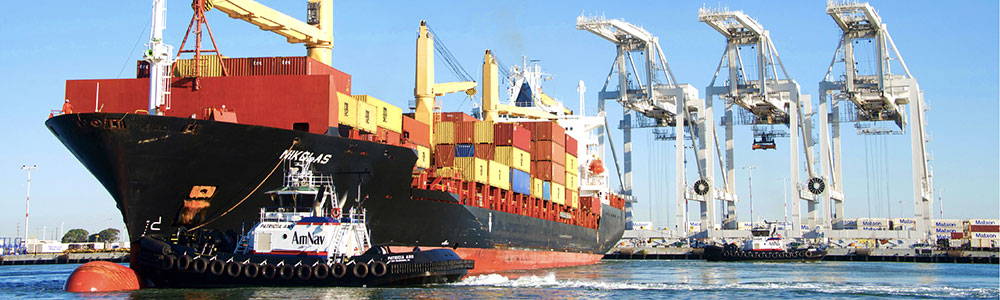
Sustainability in port operations is not only a regulatory or environmental imperative, it is a practical route to stronger business performance. Reducing waiting time at anchor directly cuts vessel emissions, but it also brings tangible financial benefits for both shipping lines and terminals. Less waiting means less fuel burned and lower operating costs for carriers, as well as fewer schedule knock-on effects that lead to missed connections or penalties.
For terminals, smarter berth planning and higher berth utilization translate into better throughput and more reliable service windows. When planners can open additional berthing windows, they create flexibility to serve ad-hoc vessel calls and stabilize weekly plans. This agility enhances customer satisfaction and can generate new commercial opportunities without capital-intensive expansion. It also reduces the hidden costs of variability, like last-minute labor reassignments, equipment idle time, and unplanned overtime.
Importantly, the same operational discipline that underpins sustainable planning – accurate scheduling, coordinated resource use, and data-driven decision-making – also improves predictability. That predictability is commercially valuable: it supports stronger service commitments, better slot selling, and a reputation for dependable turnarounds. In short, sustainability and profitability move together when planning precision and visibility reduce waste in time, fuel, and effort.
Aligning Intent, Performance, and Responsibility
The path to sustainable waterside operations begins with precision: planning every vessel movement with purpose and foresight. Smarter berth planning transforms a reactive process into a proactive, objective-driven, and robust system. By linking vessel-berth allocation, quay crane sequencing, and yard operations, terminals reduce vessel idle time, improve crane GMPH, lower emissions, and enhance overall operational efficiency.
As we see the industry accelerating its shift toward decarbonization, such operational improvements offer a clear, pragmatic path forward. They demonstrate that environmental responsibility and business performance are complementary outcomes of refined planning and coordinated execution. By investing in smarter berth management today, ports can ensure a greener, more efficient tomorrow, where every call, every crane assignment, and every berth decision contributes to a cleaner, more connected supply chain.
[1] For instance, a containership carrying around 8,000 TEU consumes approximately 225 tons of bunker fuel per day at 24 knots. Reducing speed to 21 knots lowers consumption to about 150 tons per day, a 33% decrease.
[2] In practical terms, an average reduction of three hours in waiting time per vessel, across 1,500 vessel calls per year, results in a total saving of 4,500 hours of vessel voyage time.
[3] As an example, adding just two additional vessel calls per month at a busy port can generate an extra 6,000 TEU movement. Assuming a handling rate of USD 50 per TEU, this represents an estimated annual revenue increase of 6,000 × 12 × 50 = USD 3.6 million.
Trending Now
You Don’t Change an Industry by Playing It Safe
What does it really take to break into a traditional, risk-averse industry like maritime logistics? At TOC Europ...
Learn More 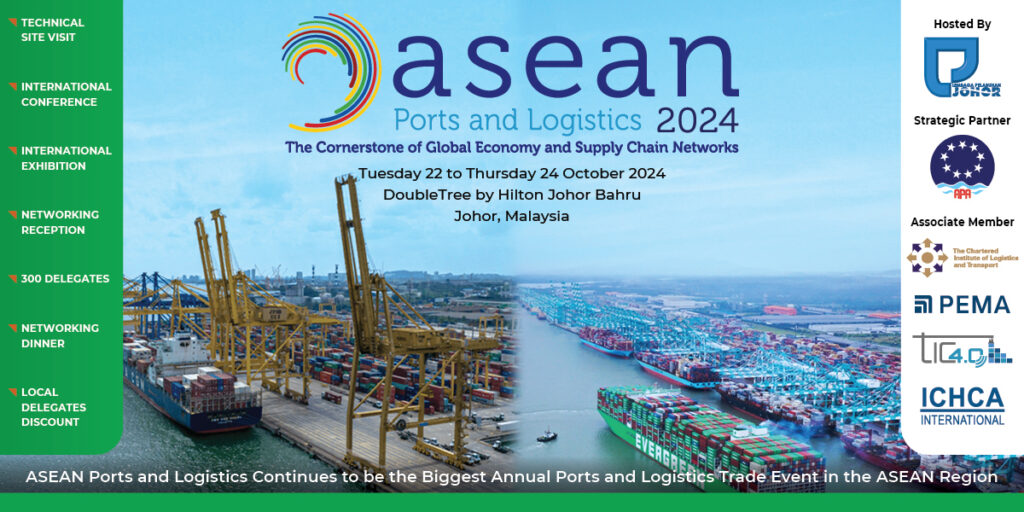
Avlino at ASEAN Ports and Logistics 2024
We are thrilled to announce that Avlino will be participating in the 22nd ASEAN Ports and Logistics Conference, ...
Learn More 
Leveraging Intent-driven Housekeeping to improve Landside Operations
In the competitive arena of container terminal operations, efficiency and precision in handling container moveme...
Learn More Take A Closer Look
Wondering what this solution looks like in your own container yard? Download the comprehensive case study that breaks down the how and why—and envision groundbreaking progress in your operations for tomorrow.