
- Solutions
- PortLink Solutions
Solutions Suite unlocks the power of optimization to make cargo flow.
Learn More Request a Demo

- PortLink Solutions
- Solutions
- PortLink Solutions
Solutions Suite unlocks the power of optimization to make cargo flow.
Learn More Request a Demo
- PortLink Solutions
From Rule-Based to Intent-Driven: A New Paradigm for Terminal Operations
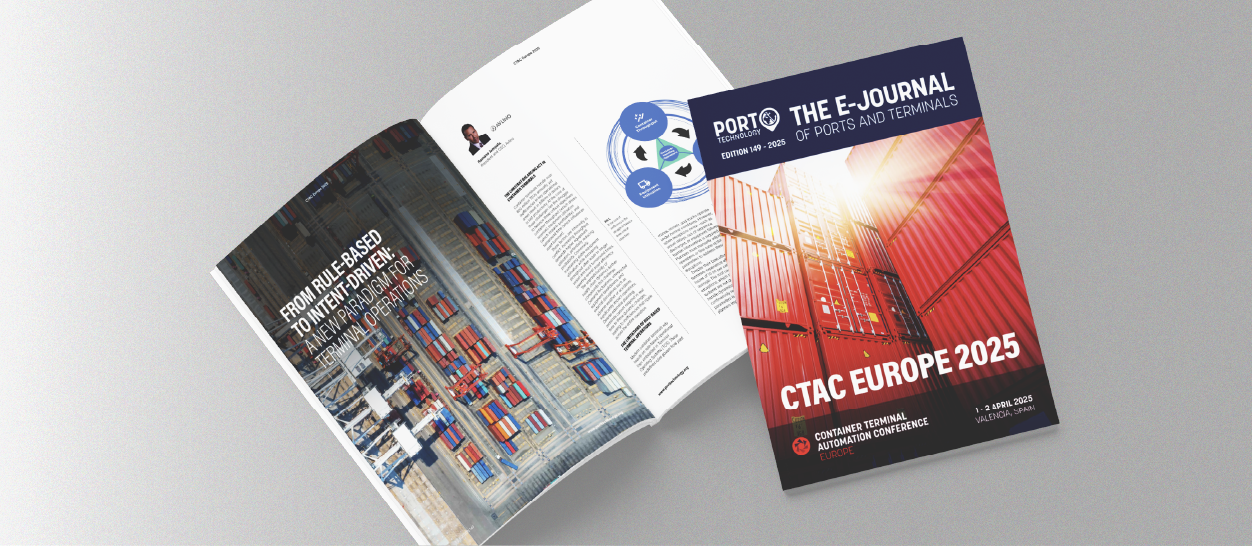
Container terminals handle over 800 million TEUs annually, yet inefficiencies in key operational areas result in billions of dollars in lost productivity. At the core of these challenges lies the struggle to balance three critical objectives: container throughput (which drives revenue), equipment utilisation (which impacts profitability), and turnaround time (which influences asset turnover).
These factors are inherently in conflict: increasing throughput demands higher equipment utilisation, potentially reducing profitability. Conversely, maintaining stable equipment utilisation while increasing throughput often leads to longer vessel and truck turnaround times, lowering overall asset efficiency.
This challenge is further compounded by the unpredictability of supply chain dynamics. Demand fluctuations, unexpected equipment breakdowns, and external disruptions such as adverse weather or accidents significantly impact operations. Despite extensive planning, terminals cannot respond in real time to these dynamic changes, leading to inefficiencies that ripple across the entire operation.
Could shifting from rule-based to intent-driven operations be the key to solving the industry’s toughest challenges? Originally published in the Port Technology Journal, Edition 149, 2025 – Container Terminal Automation Conference 2025.
Download Now!
Trending Now

A New Approach to Operational Excellence
Intent-Driven Optimization refers to a system of operations management in which algorithmic enhancements among o...
Learn More 
Avlino Joins TIC 4.0 to Advance Standardization in Container Terminal Operations
Avlino is proud to announce its membership in the Terminal Industry Committee 4.0 (TIC 4.0). By joining this inf...
Learn More 
Meeting Industry Experts at CTAC Europe 2025
The Container Terminal Automation Conference (CTAC) returns to Valencia, Spain, on April 1-2, 2025, bringing tog...
Learn More Take A Closer Look
Wondering what this solution looks like in your own container yard? Download the comprehensive case study that breaks down the how and why—and envision groundbreaking progress in your operations for tomorrow.